AWS XKS vs Native KMS: When External Key Store Is the Right Control
AWS KMS with customer managed keys (CMKs) and AWS External Key Store (XKS) both improve on AWS-managed defaults. Only one keeps unencrypted key material outside Amazon’s infrastructure. This guide helps architects decide which model matches custody, compliance and operations for AWS workloads.
Table of Contents
- What each model does
- Side-by-side comparison
- When native KMS CMKs are enough
- When you need XKS
- How DuoKey fits XKS
- Next step
What each model does
Native AWS KMS (customer managed keys)
You create CMKs in AWS KMS, set rotation and grant access through IAM. Governance and auditability improve versus AWS-managed keys. Cryptographic operations still run in AWS KMS; key material resides in AWS HSMs.
AWS External Key Store (XKS)
XKS lets applications keep using AWS KMS APIs while cryptographic operations are routed to an external key manager through an XKS proxy. AWS never receives unencrypted key material for those keys. Encrypt and decrypt happen in infrastructure you operate or mandate.
DuoKey provides an XKS proxy connected to DuoKey’s MPC Vault: operations are authorized under dual-control policy, logged, and keys do not enter AWS infrastructure.
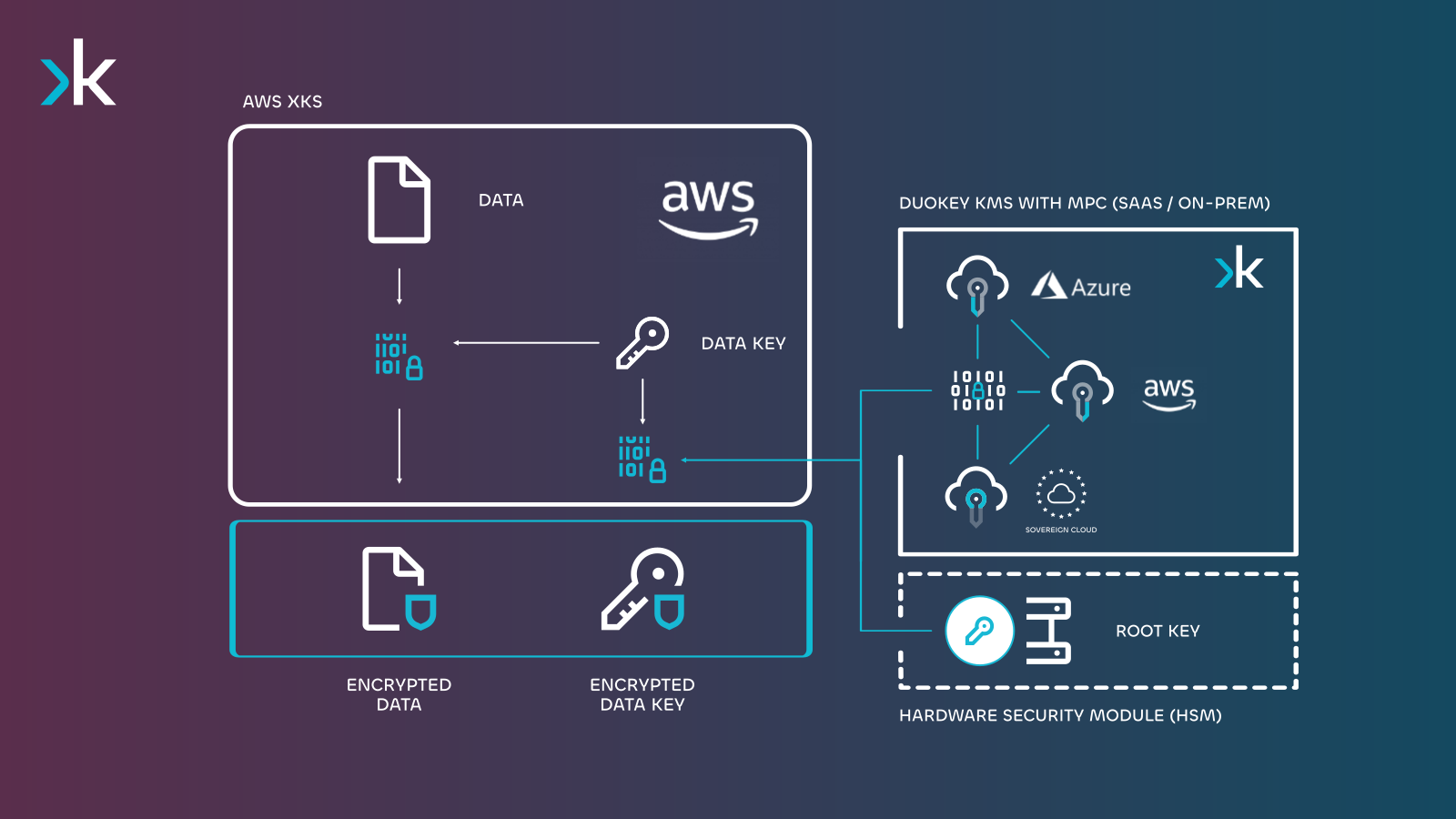
XKS: cryptographic operations route to the external DuoKey MPC Vault. AWS processes ciphertext for those keys.
Side-by-side comparison
| Question | Native KMS CMK | External Key Store (XKS) |
|---|
| Application integration | Standard AWS KMS APIs | Same KMS APIs; backend is an external key store |
| Where key material lives | AWS HSMs | External key manager (your estate or KMaaS) |
| Does AWS perform crypto ops on your CMK? | Yes | No: ops run in the external store |
| Can AWS produce plaintext for those keys? | AWS holds operational access to key material | AWS holds ciphertext paths; not your external key |
| Sovereignty depth (relative) | Strong auditability; keys in AWS trust boundary | Highest AWS-supported model for external custody |
| Operational focus | IAM, rotation, CloudTrail in AWS | Plus XKS availability, latency and failover runbooks |
AWS-managed keys sit below both: encryption on, keys entirely under Amazon’s control.
When native KMS CMKs are enough
Choose native CMKs when:
- You need customer-managed rotation, IAM grants and CloudTrail evidence inside AWS
- Your threat model accepts cryptographic operations inside AWS KMS
- Contracts or regulators ask for CMKs, not necessarily keys outside Amazon
- You want lower operational surface than running or integrating an external key store
Native CMKs are the right step when AWS-managed keys are insufficient and full external custody is not yet required.
When you need XKS
Choose XKS when:
- You must show that AWS cannot unwrap data keys for regulated workloads at will
- Financial, public-sector or sovereignty programmes require keys outside the cloud operator trust boundary
- Supervisors ask who can decrypt production data and under which policy you control
- The same custody story must align with SaaS external-key patterns (for example Microsoft DKE) across the estate
XKS keeps familiar KMS usage while moving decryption authority off Amazon infrastructure. Designs must account for latency, availability and tested failover, not only the architecture diagram.
How DuoKey fits XKS
| Path | DuoKey product | What changes for you |
|---|
| External Key Store | AWS XKS Encryption | Keep using AWS KMS in applications; external store holds the authority Amazon lacks |
| Object storage programmes | AWS S3 Encryption | S3 encryption options with customer-controlled key management where your design requires it |
Next step
- List AWS accounts and services that need keys outside Amazon versus CMK governance only.
- Read the XKS implementation guide if external custody is in scope.
- Review DuoKey for AWS XKS or schedule a scoped architecture review covering availability and evidence requirements.