A social services office files applications, a tax office files assessments, a school authority files reports and evaluations. More and more administrations do this in Nextcloud: in their own data centre, in the private cloud of a public IT provider, or with a hosting company. It is a good step away from US platforms. One question often stays open, and every data protection review asks it: who can read this data?
The real question: who holds the key?
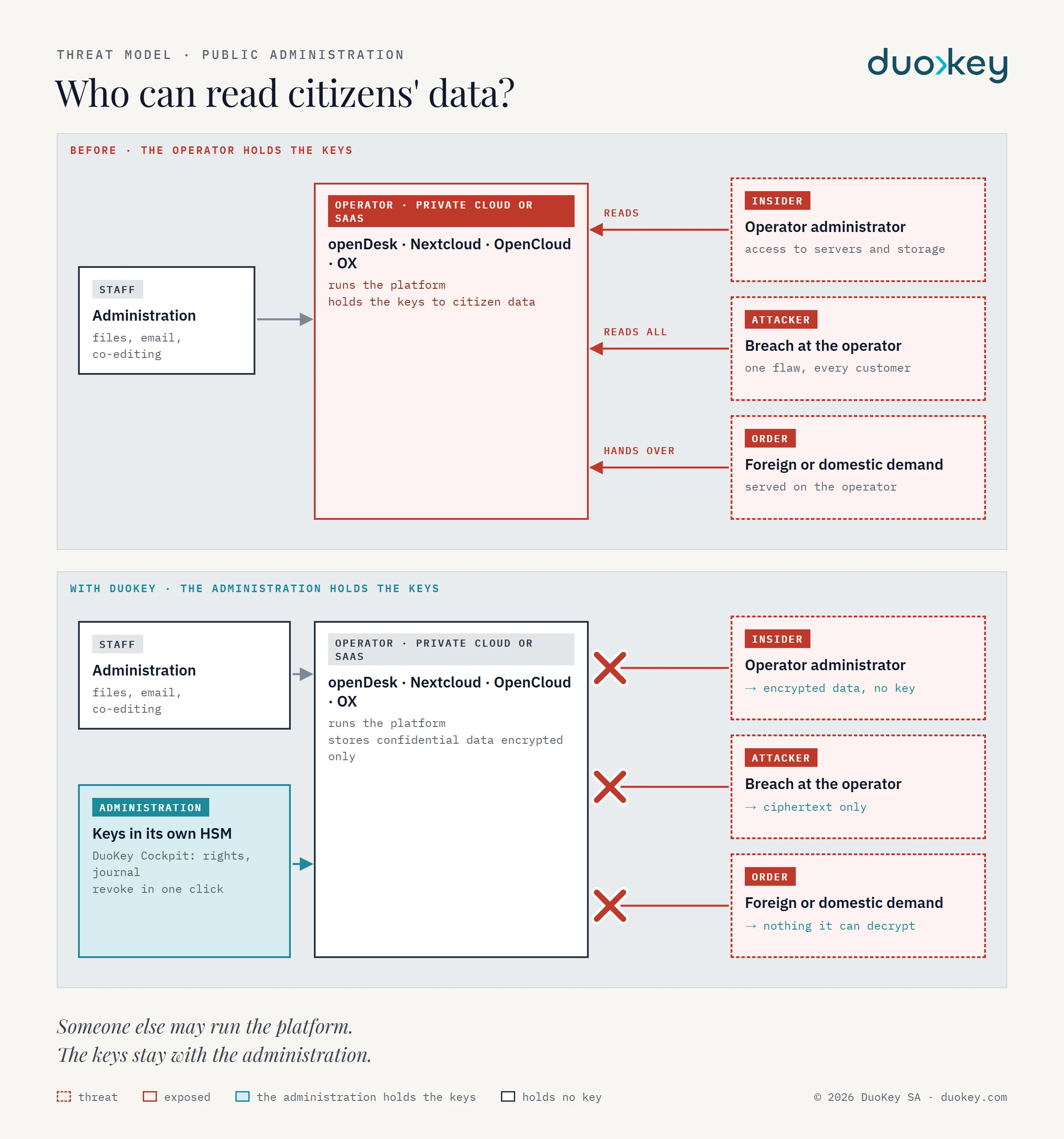
Nextcloud can encrypt files on the server. But the same server holds the key, because it has to display and edit the files. Whoever runs or takes over the server can therefore read: an administrator at the provider, an attacker after a flaw such as PHP2Shell in October 2026, or an authority that demands data from the operator.
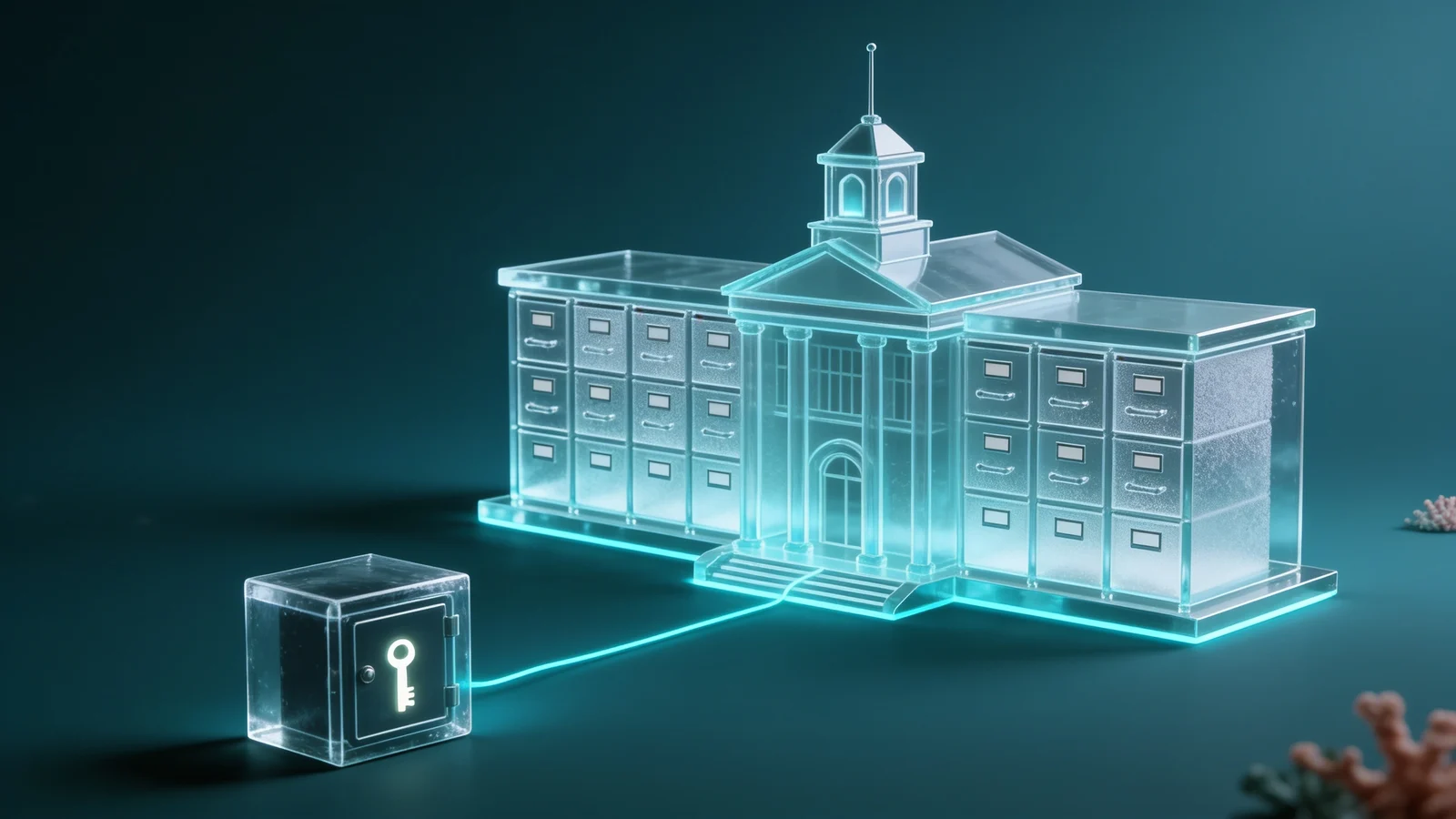
An everyday comparison: you rent archive space from a company. Whether you can trust it depends less on the quality of the shelves than on who has the key to the archive.
How DuoKey SecureFolder works, simply explained
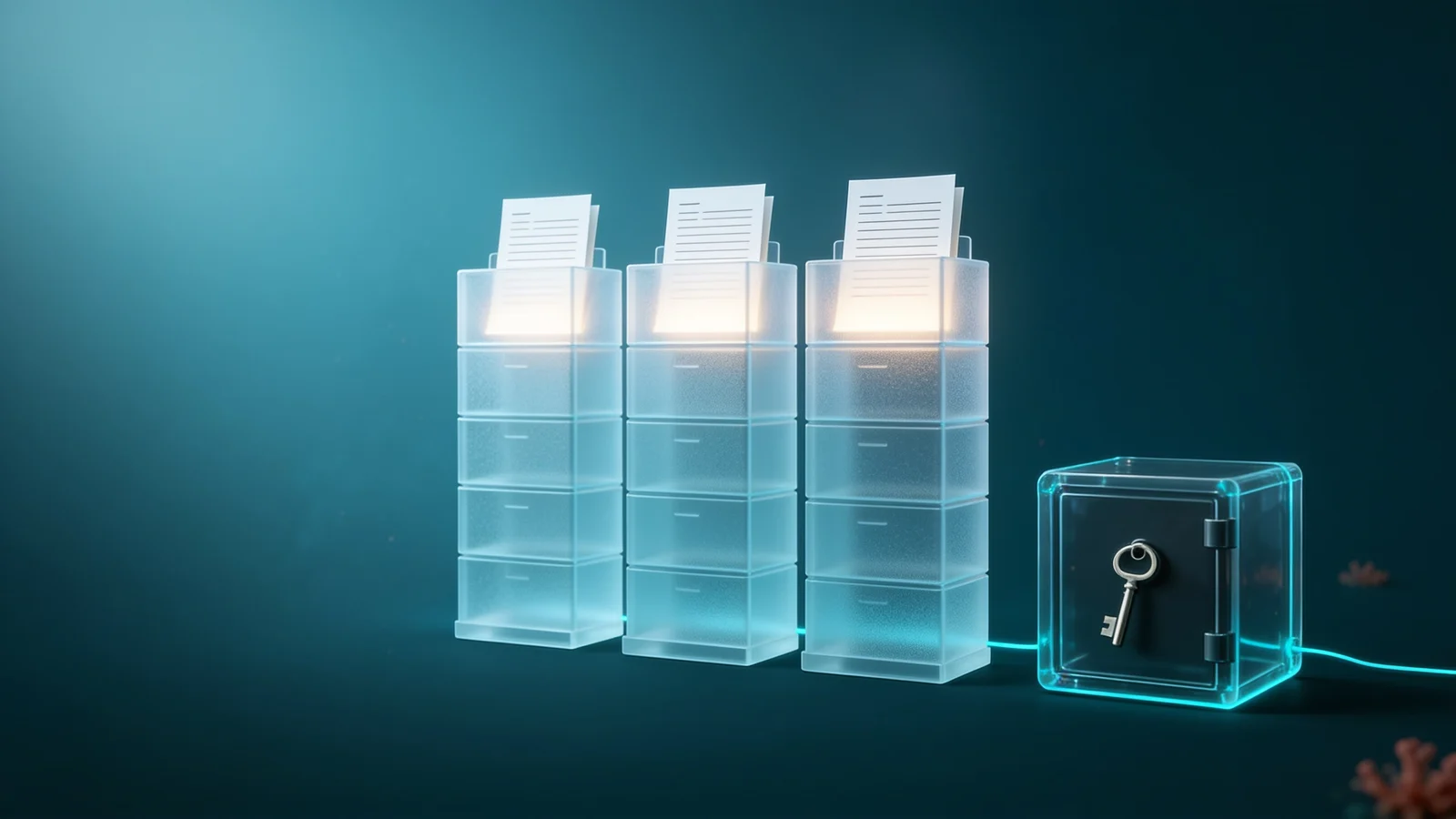
- Protected folders. You decide which folders are confidential, for example "Social assistance" or "HR files". Files in them are encrypted before they are stored. Nextcloud only sees unreadable data.
- The key stays with you. The master key sits in a hardware security module (HSM) or vault of your administration. The DuoKey Cockpit decides who may open which folder.
- Work as usual. Staff open a document with "Open with DuoKey" and co-edit it in Collabora Online. Decryption happens only while the document is edited, in memory. A watermark with the person's name and blocked export make leaks harder.
Every key release is logged: you see who opened which folder and when. One click in the Cockpit is enough to withdraw access.
What it means for your obligations
- Data protection. GDPR Article 32 requires security appropriate to the risk and names encryption explicitly. The Swiss FADP requires appropriate data security in Article 8. With social, health or tax data, the risk is high.
- Processors. If you use a provider, you remain responsible and may only use processors with sufficient guarantees (GDPR Art. 28, FADP Art. 9). An operator that cannot read the data is a much smaller risk in that assessment.
- Data breaches. If encrypted data is lost and the key was not affected, notifying the people concerned can be waived under GDPR Article 34(3).
- Official secrecy. Whoever is bound by secrecy must prevent unauthorised people from learning the content. An operator without the key learns nothing.
- NIS2. For administrations in scope, cryptography and supply chain security are among the required measures.
No product makes an administration compliant on its own. SecureFolder gives you a measure you can evidence in your data protection impact assessment.
Your own private cloud or a provider?
It fits both models. If you run Nextcloud yourself, it protects against attackers and overly broad internal access. If a provider runs Nextcloud for you, it separates running the platform from control over the data: the provider looks after servers and updates, the keys stay with you.
The limits, stated plainly
File names, sizes and shares remain visible to Nextcloud. Previews and full-text search are not available in protected folders, because the server cannot read the content. And the key becomes an important resource: its availability and backup belong in your contingency planning.
Test it
More on the DuoKey SecureFolder page. We are happy to set up SecureFolder with you in your environment, on a first folder with your keys.
Sources
- General Data Protection Regulation (EU) 2016/679, Articles 28, 32 and 34. eur-lex.europa.eu
- Swiss Federal Act on Data Protection (FADP), Articles 8 and 9. fedlex.admin.ch
- Directive (EU) 2022/2555 (NIS2). eur-lex.europa.eu